Ice caves and glacier caves
The Crystal Ice Cave experience involves natural glacier caves: openings within the ice itself. Meltwater follows cracks and drainage routes, transferring heat to the surrounding ice and enlarging passages into tunnels or chambers.
The term “ice cave” can also describe a rock cave containing ice throughout the year. In that case, the rock cavity already exists, and cold conditions allow water inside it to freeze and persist. The National Park Service distinguishes these ice-filled rock caves from glacier caves. This guide focuses on caves formed within glaciers, such as those visited in Iceland.
From snow to glacier ice
Accumulating snow becomes compacted and transformed into glacier ice. That ice flows through the glacier system over time. In Southeast Iceland, Breiðamerkurjökull is an outlet glacier of the larger Vatnajökull ice cap. The age and structure vary by location, so there is no single age that should be assigned to every visible cave wall.
The age of the ice is also not the age of the empty space within it. An old mass of ice can contain a newly developed passage.
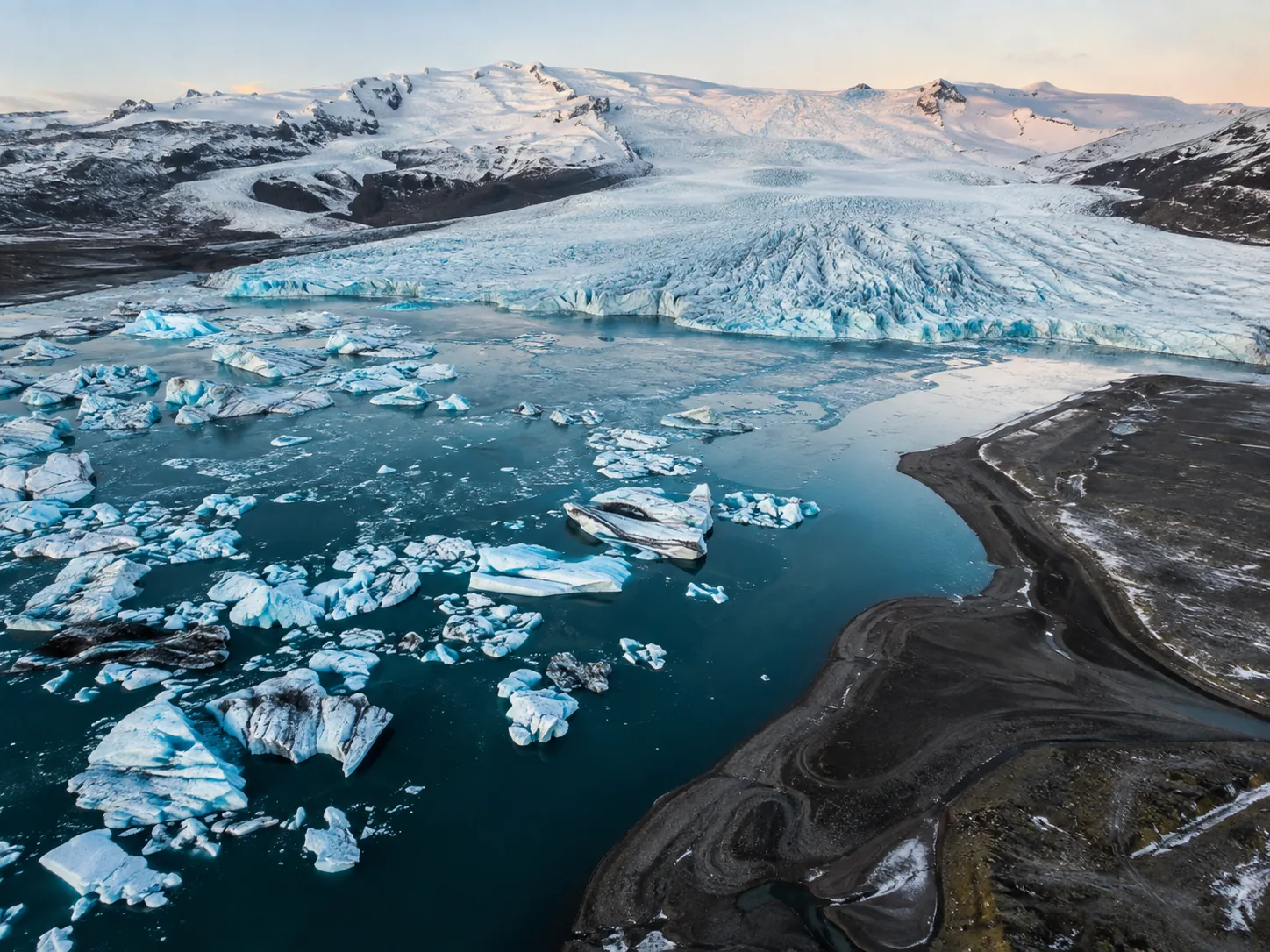
How water enters the glacier
Surface melting and rain can feed water into cracks and drainage openings. Water then follows the structure and terrain through or below the ice.
A moulin is a shaft that carries surface water into the glacier drainage system. It is part of that system, not a feature visitors should approach independently.
How a small channel grows
Flowing water transfers heat to the surrounding ice and can enlarge its route. Over time, the shape can become a narrow tunnel, a chamber or a more open feature depending on local conditions.
Some passages remain narrow; others widen into chambers. Where water drains away, an air-filled opening may remain. A cave can therefore be part of a changing drainage system rather than a permanent room. This explains why photographs taken at different times can show very different formations.
Why winter matters to visitors
Meltwater during warmer periods can help shape passages. When temperatures fall, reduced surface melting may leave less water flowing through some channels, making certain formations more practical for guides to assess. The best-time-to-visit guide explains the seasonal planning considerations.
This is not the same as saying winter simply freezes a whole cave into existence. The glacier was already ice; the cave is a space within it. Nor does colder weather establish that every passage is safe.
Why a cave can change or disappear
Glacier movement, deformation, changing water routes and melt can reshape a formation. An entrance or roof may alter, drainage may return or access may become unsuitable.
A recognizable feature can persist for a period without being permanent. The tour name therefore should not be used as a guarantee that the same chamber returns every winter.
Why the ice appears blue
Light passing through dense ice is absorbed differently across visible wavelengths. Longer red wavelengths are absorbed more strongly, so light emerging after traveling through enough ice can appear blue.
Air bubbles and snow scatter light differently and can make the surface look white. Thickness, transparency and the available light all affect what you actually see. The color comes from how light travels through the ice, rather than simply reflecting a blue sky.
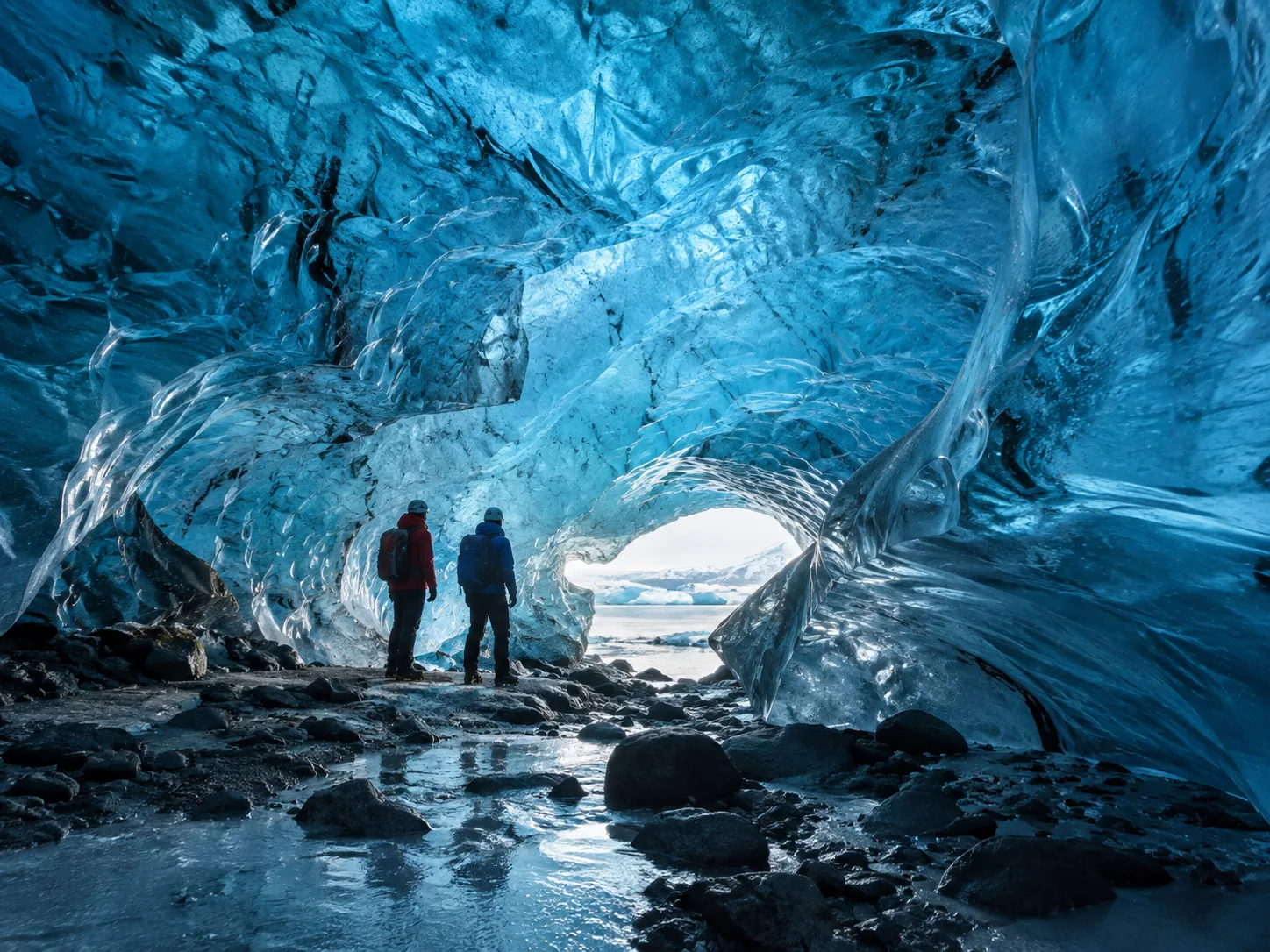
White ice, sediment and dark bands
A real glacier contains more than perfectly clear ice. Snow, air, debris and sediment can create white, gray and dark areas beside blue sections.
Do not assume that every dark band can be identified as ash from one specific eruption without evidence for that location. These features are part of the actual glacier, not a defect in the experience.
Frozen shapes inside a cave
Water freezing and melting can produce temporary hanging or rising ice features. Their appearance may resemble structures in rock caves, but the material and formation process differ.
A photograph of a particular arch or hanging feature is not an invitation to stand beneath it. Follow the guide’s route and assessment rather than visual appearance alone.
How guides use the changing landscape
The supplier descriptions explain that routes and cave selections depend on conditions. The exact balance of vehicle access, walking and time at a formation can therefore change while the product remains on sale.
Read the conditions guide and the participation information for the exact tour.
What this means for your booking
Choose a guided glacier experience, not a promised reproduction of one image. Check the current activity description, what happens when entry is not possible and the supplier’s cancellation or alternative-activity terms.
FAQ
How long does an ice cave take to form?
There is no single formation time. It depends on water flow, temperature, the existing drainage system and glacier movement. A passage can develop or change within a season, while the surrounding glacier ice is much older. The age of the ice does not tell you the age of the cave.
Does the same cave freeze back each winter?
Not necessarily. Water, movement and changing ice can produce a different formation or route.
Is the cave man-made?
The selected products describe natural glacier formations. That differs from an excavated glacier tunnel. Check the actual itinerary rather than assuming all attractions called an ice cave are the same.