CHOOSE YOUR WINDOW
When should you visit?
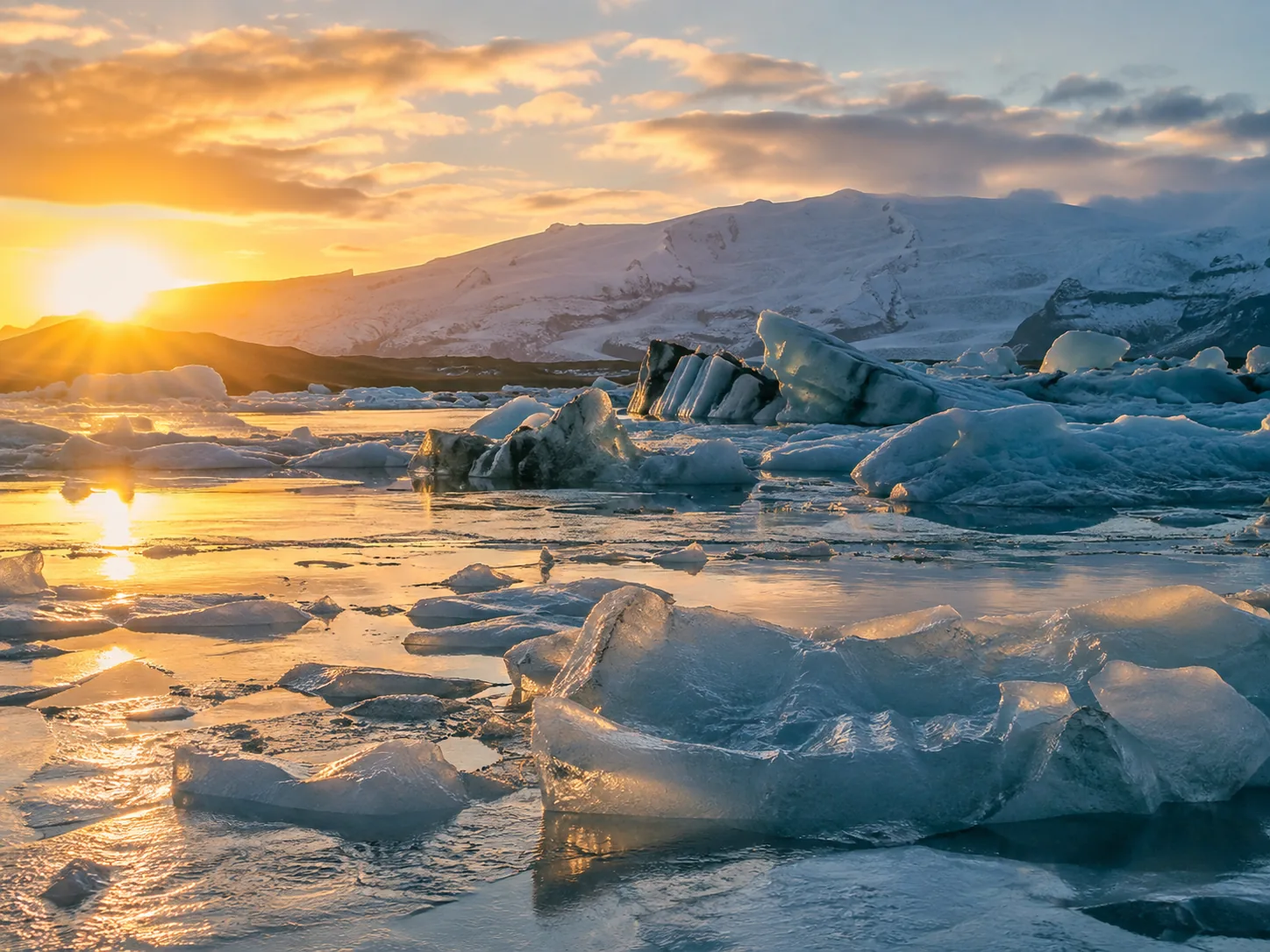
For the winter-focused Crystal Ice Cave experience, begin by comparing November to March. Our planning preference is February or March when you also want time for the South Coast. You gain daylight compared with midwinter without deliberately booking at the edge of an advertised season.
There is a wider booking window on some products: Arctic Adventures advertises October to April. Local Guide also aims for October to April, while noting that the dates depend on conditions. These are operator schedules, not guaranteed cave-opening dates.
OUR PLANNING PICK
February & March
Start here for a winter cave trip with more daylight for the journey and nearby sights. This is our itinerary recommendation, not a prediction of better ice.
SHORT-DAY WINTER
December & January
Choose these months for a trip centred on winter activities. Stay nearby and give the cave excursion priority in a shorter sightseeing day.
SEASON EDGES
October & April
Useful when these dates fit your trip, but confirm the operator’s opening or closing schedule before arranging a visit around the cave.
The year at a glance
Winter and edge labels describe the usual product season, not today’s access. “Other trips” means checking a different glacier activity or destination rather than assuming this winter tour is available.
Choose a month for the trip you want, then confirm the actual cave, walking requirements and departure with your operator. Check the conditions guide before travelling.
MONTH BY MONTH · EARLY SEASON
October and November
Early-season planning is about matching a bookable departure to the glacier experience actually being offered, not to last winter’s photographs.
OCTOBER
A developing season
October can work well when your South Coast trip is already planned for autumn. Ask what the tour currently visits and whether that means a large cave, a shorter tunnel or a combination of blue-ice features.
Local Guide’s seasonal reports show how rain and changing access can alter early routes. An advertised start date does not establish the shape of the cave or the length of the approach.
Plan it this way: confirm the current route before making the cave the fixed centrepiece of a short trip.
NOVEMBER
A winter trip with a tighter day
November is a sensible month to compare when you want a winter-focused itinerary before the shortest days. Keep the day simple: the cave first, with nearby stops around the confirmed departure.
Do not choose November because someone promises fewer visitors or bluer ice. Neither the operator information nor our tour records establishes a reliable month-by-month advantage.
Plan it this way: stay in Southeast Iceland the night before and leave sightseeing flexible.
MONTH BY MONTH · MIDWINTER
December and January
DECEMBER
Make daylight count
December brings the shortest days of the year. Think of the cave excursion as the main daytime activity rather than one item in an ambitious route from Reykjavík and back.
Choose accommodation around your departure, allow time to check in and leave the lagoon or beach for whatever daylight remains. For Christmas and New Year dates, check the actual departures and room availability before committing.
Plan it this way: favour a nearby overnight stay over a rushed, long-distance morning drive.
JANUARY
Keep the schedule flexible
January remains a short-day winter choice, although daylight returns as the month progresses. There is no need to assume it has the strongest blue colour simply because it falls deep in winter.
The national park warns that winter roads and footpaths can be slippery. Your route to Jökulsárlón is part of the planning decision, not just the excursion after check-in.
Plan it this way: leave room between the glacier day and any essential onward connection.
No month removes weather risk. Plan the journey separately from local parking and check-in directions.
MONTH BY MONTH · LATER WINTER
February and March
These are our first months to compare for a balanced winter itinerary. The advantage is more daylight for the whole day, not a guarantee of a larger cave or easier walking.
FEBRUARY
Our balanced winter choice
February gives you more daylight than December and January, which makes it easier to place a cave tour within a wider South Coast day. It is a practical starting point for visitors who want winter travel without the shortest sightseeing window.
Treat extra daylight as breathing room, not as permission to squeeze in more distant stops. Glacier access and winter driving still depend on conditions.
Plan it this way: book the departure that fits your overnight base, then add nearby sightseeing.
MARCH
More room around the tour
March offers a longer day again, so it is worth comparing when you want the cave, lagoon and onward journey to feel less rushed. The extra time is also useful for photography outside the cave.
Do not interpret the calendar as a smooth improvement in access. Local Guide’s March 2026 archive records rain, snowfall and flooding that changed the available features. That is a historical example, not a forecast for your visit.
Plan it this way: use the longer day for flexibility and check the route close to departure.
MONTH BY MONTH · SEASON END
April: check the actual finish date
April can still be bookable on winter products, but it is a transition month. The national park describes spring thaw, wetter ground and muddy conditions during this period.
A tour running on one April date does not guarantee that the same route will remain in use later in the month. Ask about the exact departure, the planned walking distance and what happens if access changes.
For travellers whose main goal is this cave experience, our preference is to compare dates within the winter period before choosing the last few days of a supplier’s calendar. April can still suit a trip already planned for spring.
Before booking: confirm that the listing is the winter cave product you expect, rather than a different glacier hike with an optional ice feature.
LIGHT, ICE & PHOTOGRAPHY
The bluest ice is not a calendar date
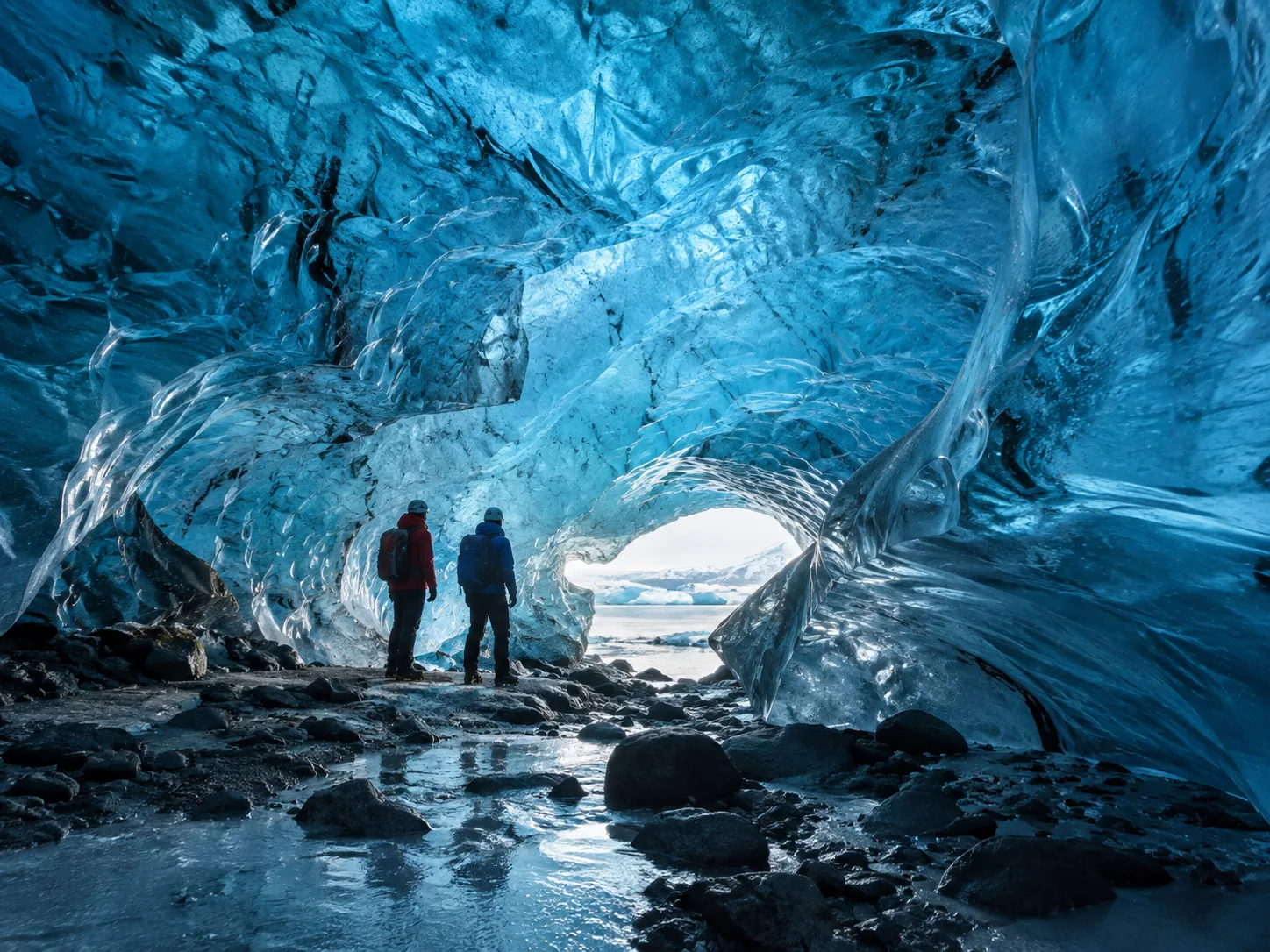
The blue appearance comes from the way light travels through glacier ice. Snow and trapped air scatter light and can make surfaces look whiter; denser ice can reveal stronger blue tones.
The formation, snow cover and incoming light matter more than a simple “best blue month” label. Arctic Adventures also notes that photographs may differ from the conditions visitors actually see.
Choose the departure for the current cave
Ask your operator about the light and time spent inside the feature they are using now. The earliest departure is not automatically the brightest, and a longer tour does not necessarily mean more time inside a chamber.
For the wider trip, February and March give more daylight to work with than midwinter. Inside the cave, use the light that is available. Read the photography guide for camera and phone advice.
Daylight is not the same as sunshine
A longer sunrise-to-sunset window does not promise clear skies, dry roads or a brighter cave interior. Use the month to arrange your itinerary, and the forecast and operator advice to make decisions near departure.
SPACE & VALUE
Plan for your group, not an empty cave
FEWER PEOPLE
Compare the format
Arctic Adventures warns that a formation can be shared with other groups. A smaller booked group does not mean exclusive use of the cave.
Ask about group limits, pacing and whether a private departure offers any timing flexibility. Do not read “private” as a guarantee of an empty chamber.
BETTER VALUE
Compare the complete trip
We do not have a dependable monthly price series showing a cheapest month. Compare the total for your dates: tour, accommodation, transport and cancellation terms.
A lower tour price is not necessarily a better deal if it forces a longer drive or an extra overnight stay. Start with a workable itinerary, then compare the available products.
MAY TO SEPTEMBER
A different season, a different plan
Do not plan a May-to-September trip around the assumption that the classic winter Crystal Ice Cave tour will be available. Check the specific product, rather than treating every activity with “ice cave” in its name as interchangeable.
STAYING NEAR JÖKULSÁRLÓN
Look at the wider glacier visit
Keep your Southeast Iceland itinerary, but choose an activity confirmed for your dates. Ask whether the experience is a glacier walk, an enclosed cave visit or another type of ice formation.
For September, check the operator’s announced start date; autumn travel does not by itself confirm that winter departures have begun.
A NATURAL CAVE ALTERNATIVE
Compare Katla
KatlaTrack advertises year-round departures from Vík. This is a different destination and glacier-cave experience, not the summer version of a Jökulsárlón tour. Individual departures still depend on conditions.
Choose it because it suits your dates and route, not because it promises an identical colour or chamber.
PUT IT TOGETHER
Build a little flexibility into the trip
Choose a good travel window, but avoid making the entire journey depend on one unchangeable departure. A nearby overnight stay and clear cancellation terms are more useful than a promise that one month is always best.
01 · CHOOSE
Start with your dates
Compare November to March first for a winter-focused visit. Check the exact operator schedule at either edge of the season.
02 · CONNECT
Match the journey
Arrange the departure and accommodation together. A local tour and a multi-day Reykjavík package solve different travel needs.
03 · RECHECK
Confirm before setting out
Read the operator’s latest instructions and check road and weather alerts. Contact the operator if the journey becomes unsuitable.
For families, check eligibility and the current walk before choosing a date. The family guide and clothing checklist cover preparation without repeating it here.
A FEW FINAL DETAILS
FAQ
What is the best month to visit?
Our planning preference is February or March for a winter trip with more daylight around the excursion. November to March is the main period we would compare first. This is an itinerary recommendation, not a forecast of cave quality.
When does the season start and finish?
Some local products advertise October to April. Start and finish dates belong to each operator and can depend on conditions. Check the exact dates of the product you intend to book.
Is December too dark for a tour?
December tours can fit a short winter day, but plan the journey carefully. Stay close to the departure area, make the excursion your main daytime activity and leave other sightseeing flexible.
Is March better than January?
March offers more daylight for the rest of your itinerary. It does not automatically offer better ice, shorter walking or fewer cancellations. Choose based on your travel plans and current operator advice.
Can I visit in April?
Some operators advertise April departures. Confirm your exact date and the experience currently being offered, rather than assuming the same winter route continues throughout the month.
Does booking early guarantee the cave in the photos?
No. Booking secures a product under its terms, not a permanent natural chamber. Review what the supplier offers if the route or cave changes, and keep expectations tied to recent information.